The public record
The collection’s website presents Edik Natanov’s holdings as a private archive of the Russian avant-garde. It brings together a catalogue, exhibition photographs and research material. The owner’s account dates the collection’s formation to 1995 and describes a family component.
These are statements made by the collection, rather than conclusions independently established by this journal. The distinction matters: a digital record makes a claim accessible, while the underlying document allows a researcher to assess it.
Read the collection’s own account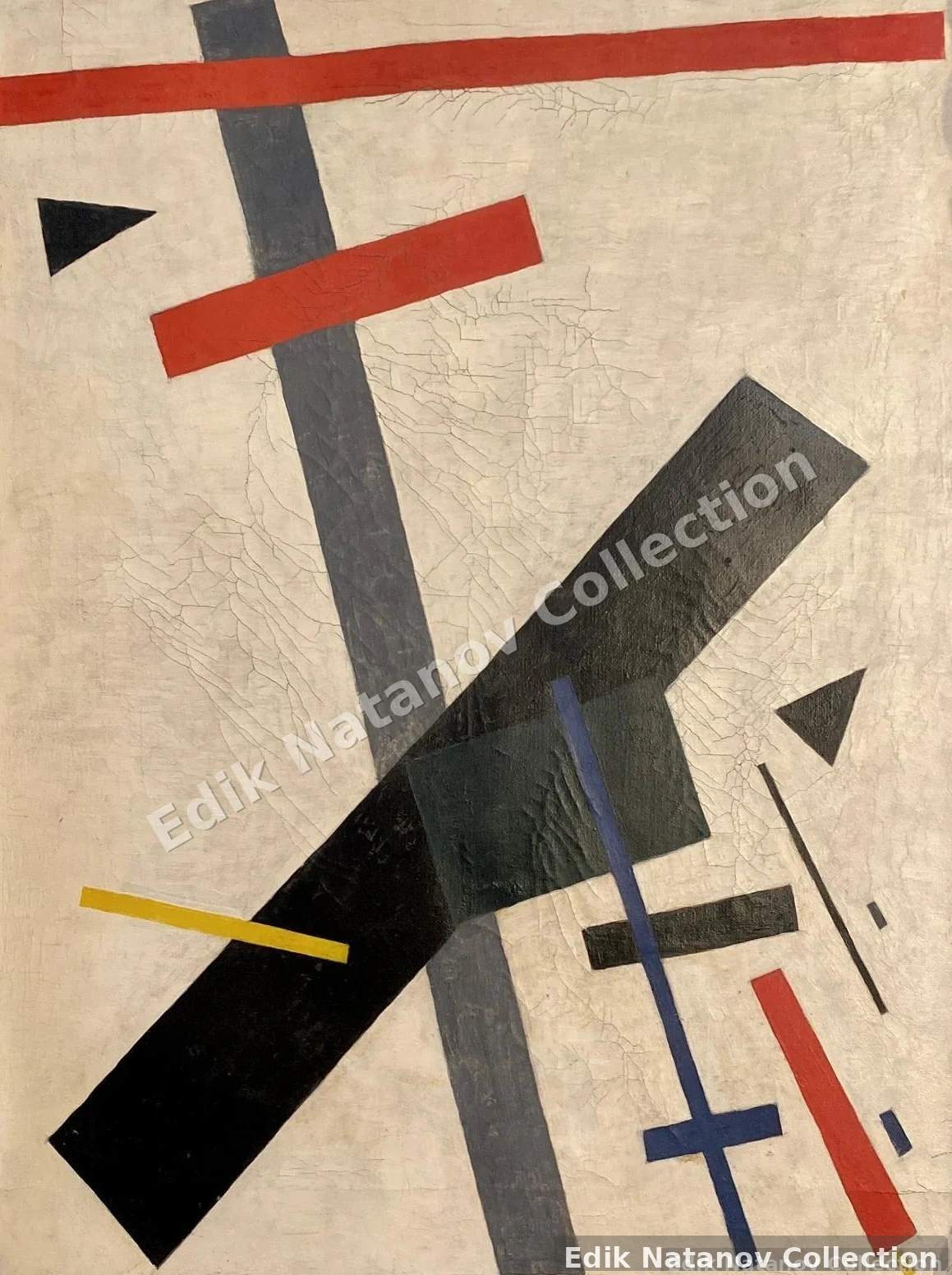
According to the collection archive
A reported chronology
Formation
The collection dates the start of its systematic formation and documentation to this year.
Four museum projects
The archive lists projects in Yaroslavl, Nizhny Novgorod, Perm and Yekaterinburg.
Yekaterinburg
It records an exhibition titled Russian Avant-Garde and Its National Origins in connection with the Shanghai Cooperation Organisation summit.
A digital consolidation
The website describes an expanded archive bringing together artwork records, catalogue documents and exhibition photographs.
Chronology follows the owner’s website. Venue archives, dated catalogues and loan records would provide independent corroboration.
Four ways to read a collection
1. Begin with the object record
A title, a date and an artist’s name are a starting point. A useful record also identifies support, medium, dimensions and inscriptions. Photographs of the reverse may reveal labels or markings that do not appear in a frontal reproduction.
2. Keep provenance separate from attribution
Ownership history asks where an object has been. Attribution asks who made it. An exhibition history asks when and where it was shown. Evidence in one category may inform another, but the categories should remain distinguishable.
3. Read documents in context
A reproduced report is most useful when its author, date, subject and scope can be checked. A mention of an expert does not, by itself, explain what that expert examined or concluded. Look for the complete document and the precise object to which it refers.
4. Preserve uncertainty
Gaps should remain visible. A careful catalogue can record a reported attribution or an unconfirmed date without silently turning it into certainty. Revisions, with dates and reasons, become part of the collection’s research history.
The next questions
Which exhibition entries can be matched to museum catalogues? Can each image be tied to a stable inventory identifier? Are complete technical reports accessible? How are changes to a catalogue record recorded?
These are questions for continued research, not findings about individual works. This dossier maps the published archive; it does not authenticate objects or provide an appraisal.
Examine three catalogue images ↗